Sarang Holidays, Ulliyeri, Kozhikode
Sarang Holidays, Ulliyeri, Kozhikode is one of the best in the field of Tours and Travels in Ulliyeri, Kozhikode .
Location, Overview and Description:
About Sarang Holidays
Sarang Holidays is a trusted name in the travel industry, offering comprehensive tour packages and travel services since 2004. As a reputable tour package provider, travel agent, and tour operator, we have established ourselves as a reliable partner for travelers seeking unforgettable experiences. Located in Ulliyeri, Kozhikode, conveniently near SBI Bank, our office is accessible to clients seeking personalized travel solutions. With our commitment to excellence and customer satisfaction, we strive to make every journey memorable and hassle-free.
Credibility and Experience
With over 17 years of experience in the travel industry, Sarang Holidays boasts a strong reputation for credibility and expertise. Our team comprises seasoned professionals with in-depth knowledge of destinations, ensuring that our clients receive accurate information and tailored recommendations. We are committed to transparency and integrity in all our dealings, earning the trust and loyalty of our clients over the years. Our track record of successfully organizing and executing countless tours reflects our dedication to providing exceptional service and unforgettable experiences.
Customer Satisfaction
At Sarang Holidays, customer satisfaction is our top priority. We understand that each traveler has unique preferences and expectations, which is why we offer personalized travel solutions to cater to individual needs. From crafting custom itineraries to providing round-the-clock assistance, we go above and beyond to ensure that our clients have a seamless and enjoyable travel experience. Our commitment to excellence has resulted in numerous positive reviews and testimonials from satisfied clients who appreciate our professionalism, attention to detail, and unwavering dedication to customer satisfaction.
Frequently Asked Questions (FAQs) and Answers
-
What types of tour packages do you offer?
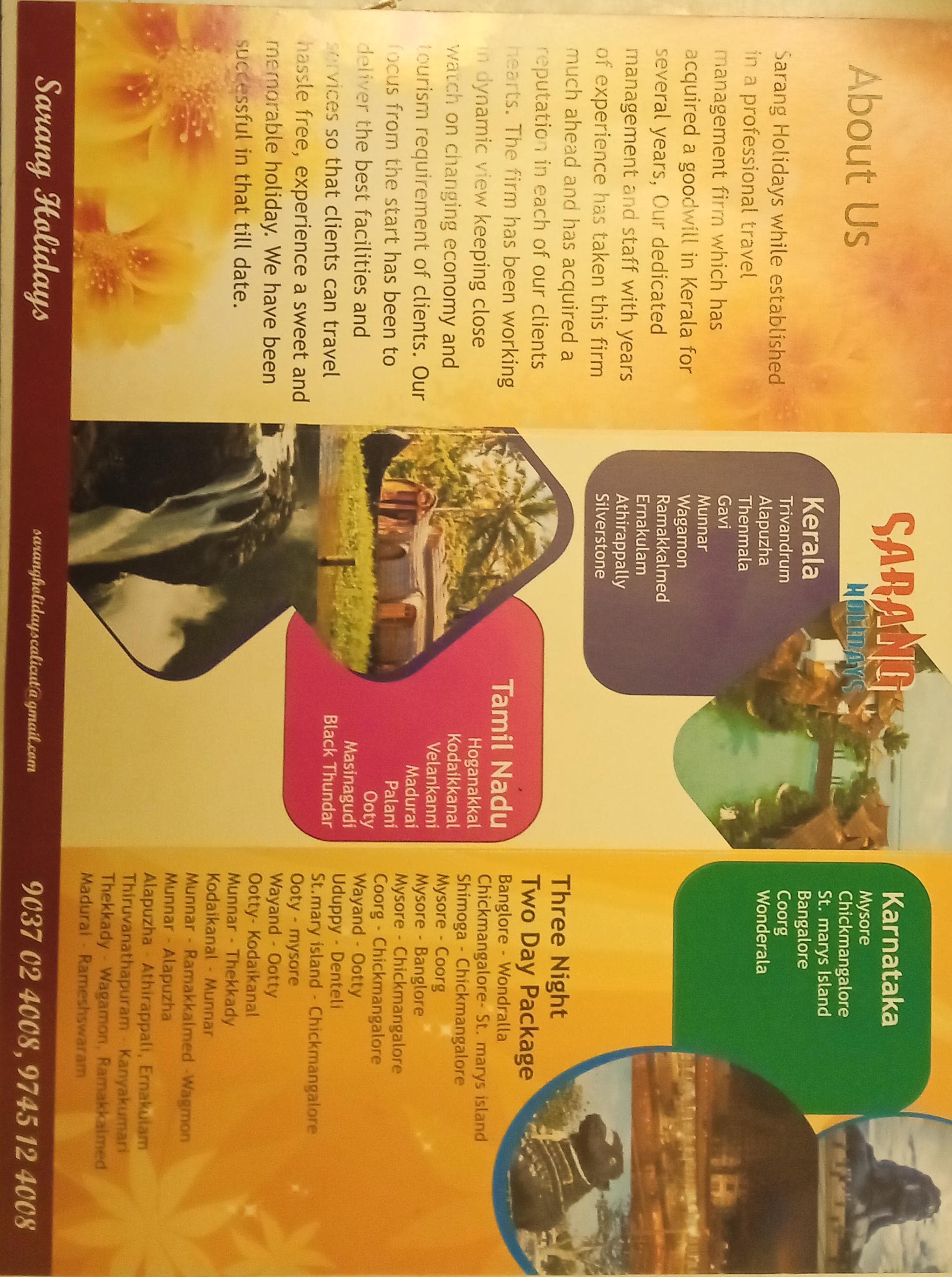
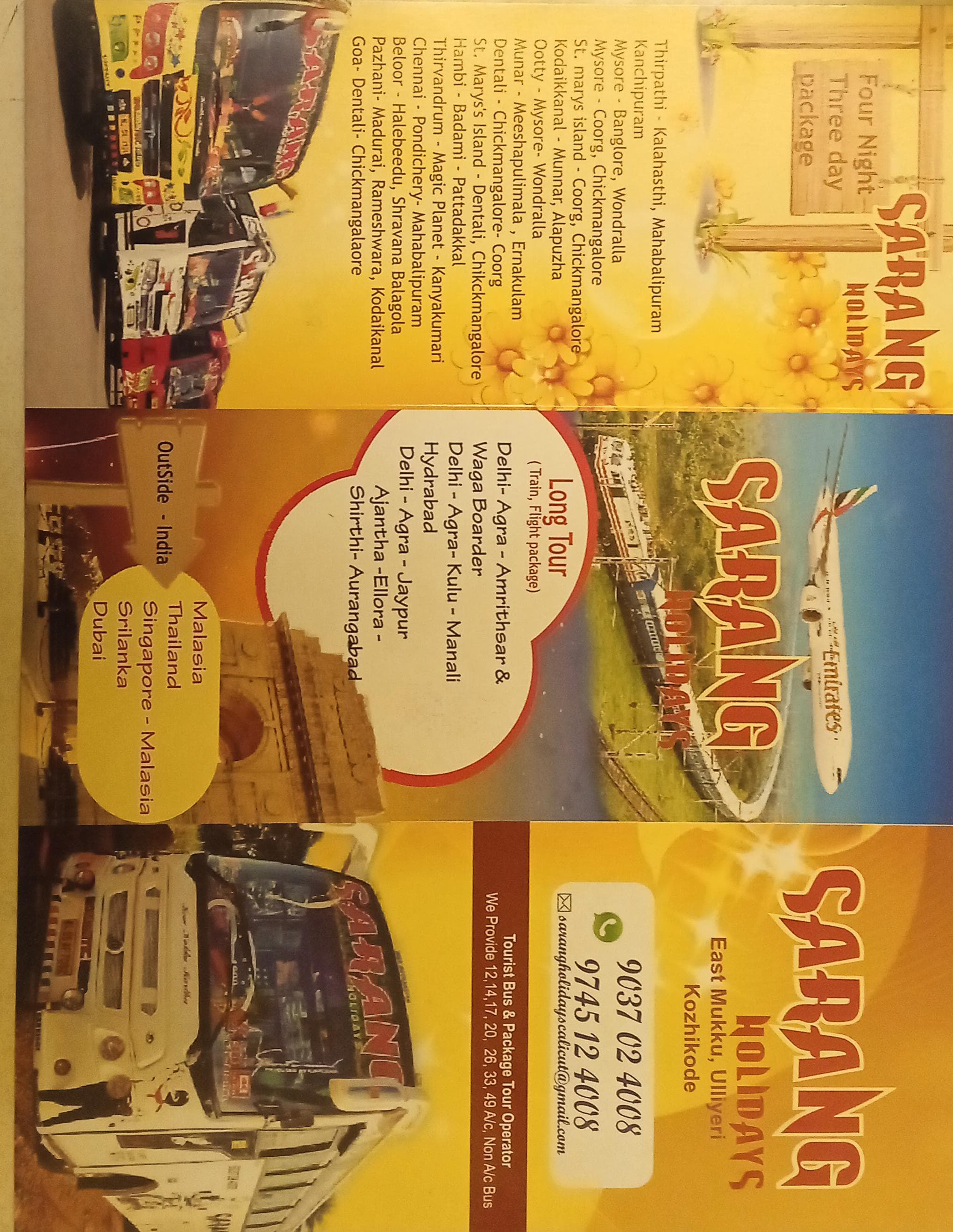
- Sarang Holidays offers a wide range of tour packages covering various destinations, including domestic and international destinations, adventure tours, cultural tours, and honeymoon packages.
-
How do I book a tour package with Sarang Holidays?
- Booking a tour package with Sarang Holidays is easy. You can either visit our office in person, contact us via phone or email, or book online through our website.
-
Are your tour packages customizable?
- Yes, we understand that each traveler has unique preferences. We offer customizable tour packages tailored to suit your interests, budget, and schedule.
-
Do you provide travel insurance with your tour packages?
- Yes, we offer optional travel insurance with our tour packages to provide peace of mind and financial protection against unforeseen circumstances.
-
What safety measures do you have in place during tours, especially in light of COVID-19?
- We adhere to strict health and safety protocols during tours, including sanitization of vehicles and accommodations, adherence to social distancing guidelines, and provision of hygiene kits for all travelers.
-
Do you offer group tours or individual tours?
- We offer both group tours and individual tours, allowing travelers to choose the option that best suits their preferences and travel style.
-
What is your cancellation policy for tour packages?
- Our cancellation policy varies depending on the type of tour package and the terms and conditions of our suppliers. We provide detailed information on cancellation policies at the time of booking.
-
Can I make changes to my itinerary after booking a tour package?
- Yes, we understand that plans may change. We allow limited changes to itineraries after booking, subject to availability and any applicable fees or charges.
-
Are your tour guides experienced and knowledgeable about the destinations?
- Yes, our tour guides are experienced professionals with extensive knowledge of the destinations. They provide valuable insights and information to enhance the travel experience for our clients.
-
What sets Sarang Holidays apart from other tour operators?
- Sarang Holidays stands out for its commitment to excellence, personalized service, and unwavering dedication to customer satisfaction. We prioritize building long-term relationships with our clients and strive to exceed their expectations with every journey.